Friday, June 7, 2013

Sand pendulum

On Friday we visited the Boston Museum of Science. In the Mathematica exhibit, there was a two-axis pendulum with a weight that would pour out sand. 

It would make a figure eight motion and began to form a pattern.

Thursday, June 6, 2013

Thursday: Chocolates

Posts have been a little slow this week, but I assure you I've still been doing patterns. My boyfriend and I were traveling in Boston and didn't have great internet connectivity. On Thursday, we found a Lindt Chocolates store, and bought many different flavors of the Lindor Truffles. After eating about half of them, I decided to draw the rest.

Tuesday, June 4, 2013

Featured Artist: Lisa Chow

Today’s guest artist is Lisa Chow, a Houston-based illustrator who has turned her art making into her own business. I fell in love with her cute and playful patterns at the Austin Renegade Craft Fair, and she has graciously shared her story with us.

A: What’s your background? When did you really get into art? Do you have formal training, or are you self-taught?

L: I have been drawing and painting since childhood. One of my earliest memories are of my crayon family portraits drawn onto my childhood home's living room walls (sorry Mom!). Elementary, middle, and high school days were filled with art classes, art clubs, and art competitions. But when it came time to choose a career, I traded in my paintbrushes for a business degree and worked in information technology for a few years. I found myself unsatisfied with my desk job and I began drifting back towards art. It has been a slow transition but I am now a full-time, self-taught artist and illustrator. And I wouldn't have it any other way.

A: What (or who) are your inspirations?

L: My favorite sources of inspiration are children's stories and movies. Currently: Wes Anderson's Moonrise Kingdom and Fantastic Mr. Fox. Always and Forever: Peter Pan and Alice in Wonderland

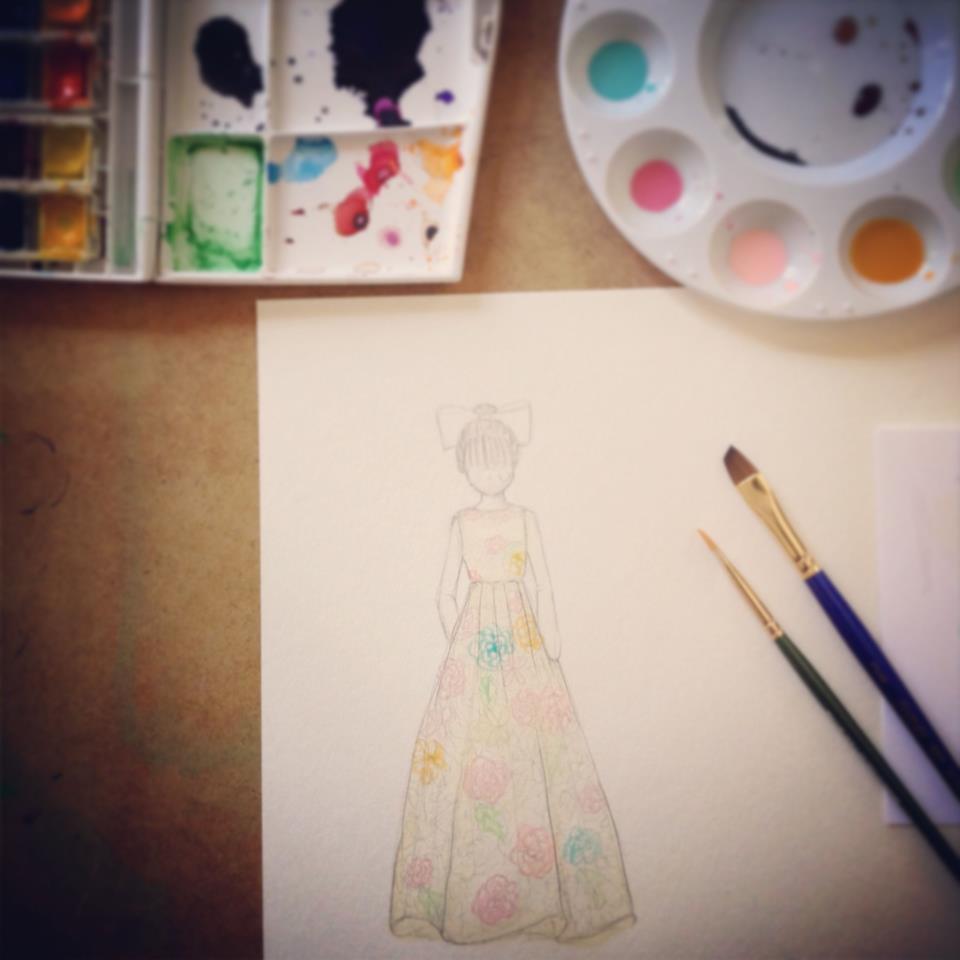
watercolor painting of a girl

A: How did you get started designing patterns?

L: I really wanted to see my drawings used in different applications, especially as gift wrap and on fabric. Patterns naturally followed.

A: How does your medium influence your work?

L: Watercolors can be beautifully soft and sheer and delicate. All three things I strive for in my work.

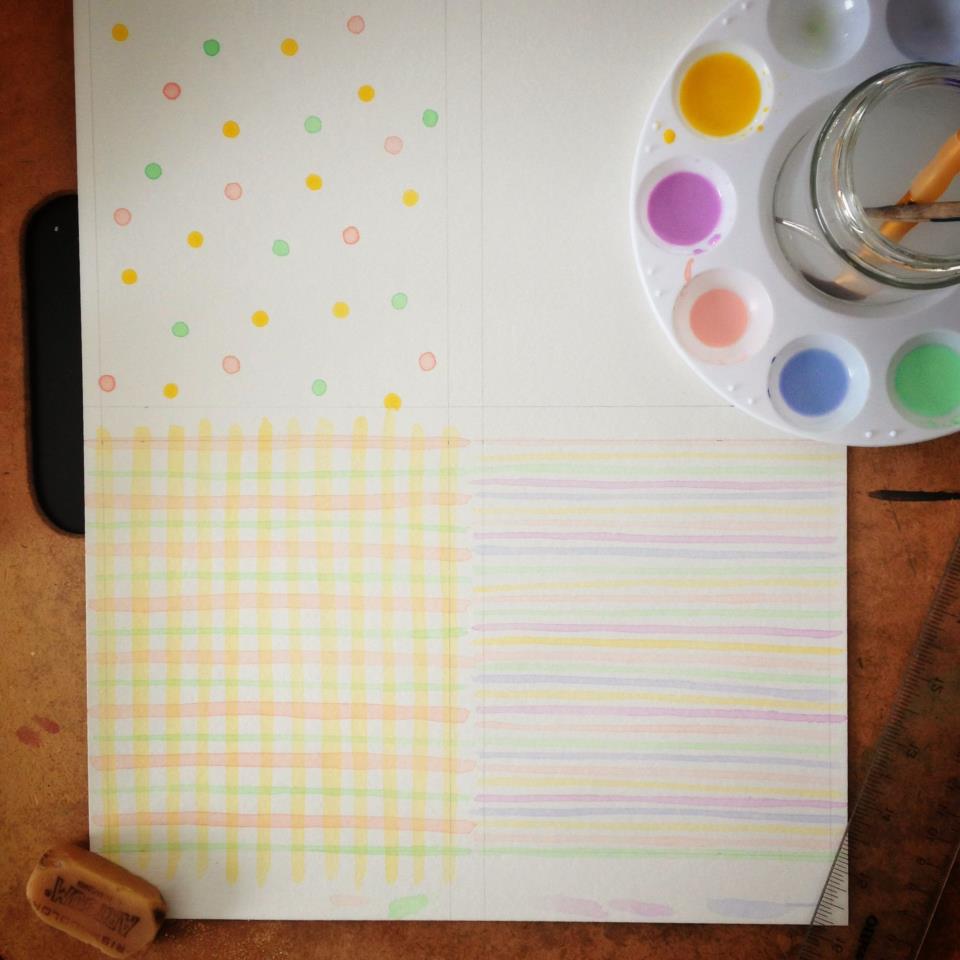
watercolor pattern designthin watercolor stripes

A: Can you please describe your work process?

L: Everything starts with an idea and a sketch. Once I'm happy with a sketch, I will transfer the image onto nice paper. Then it's onto coloring, shading, outlining and magic making.

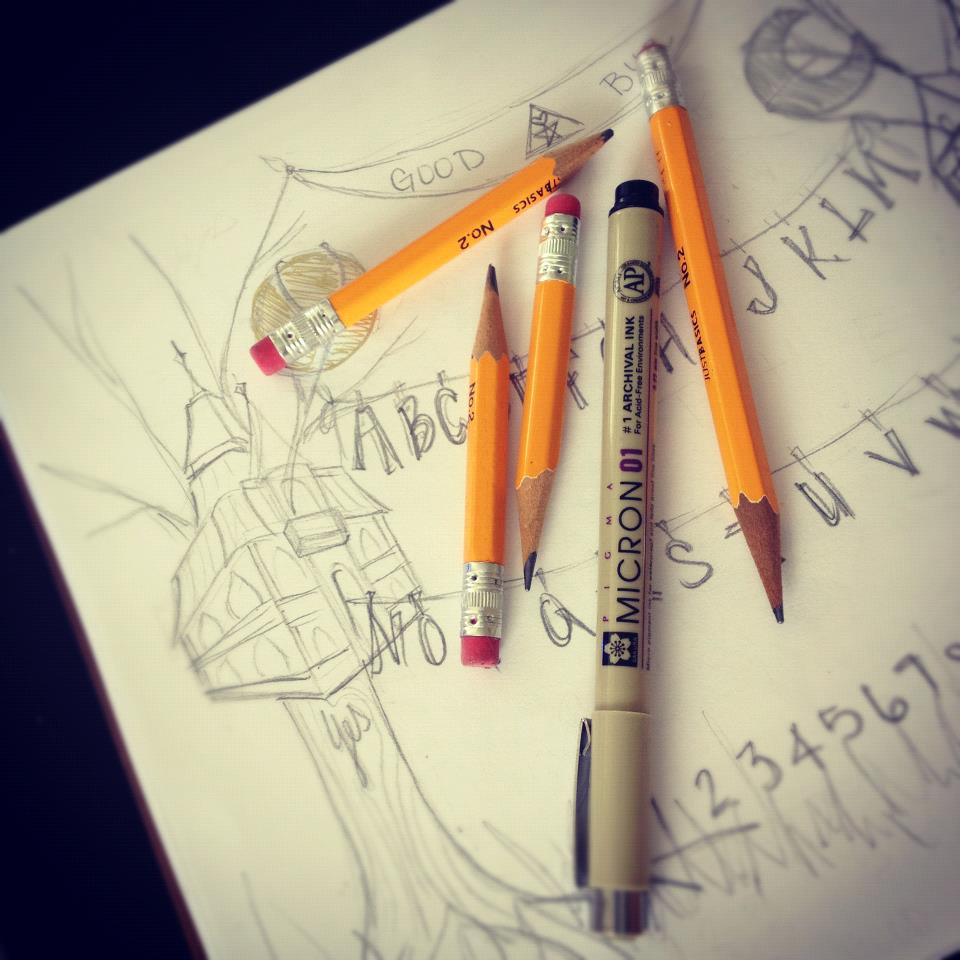
writing tools on a sketchbook
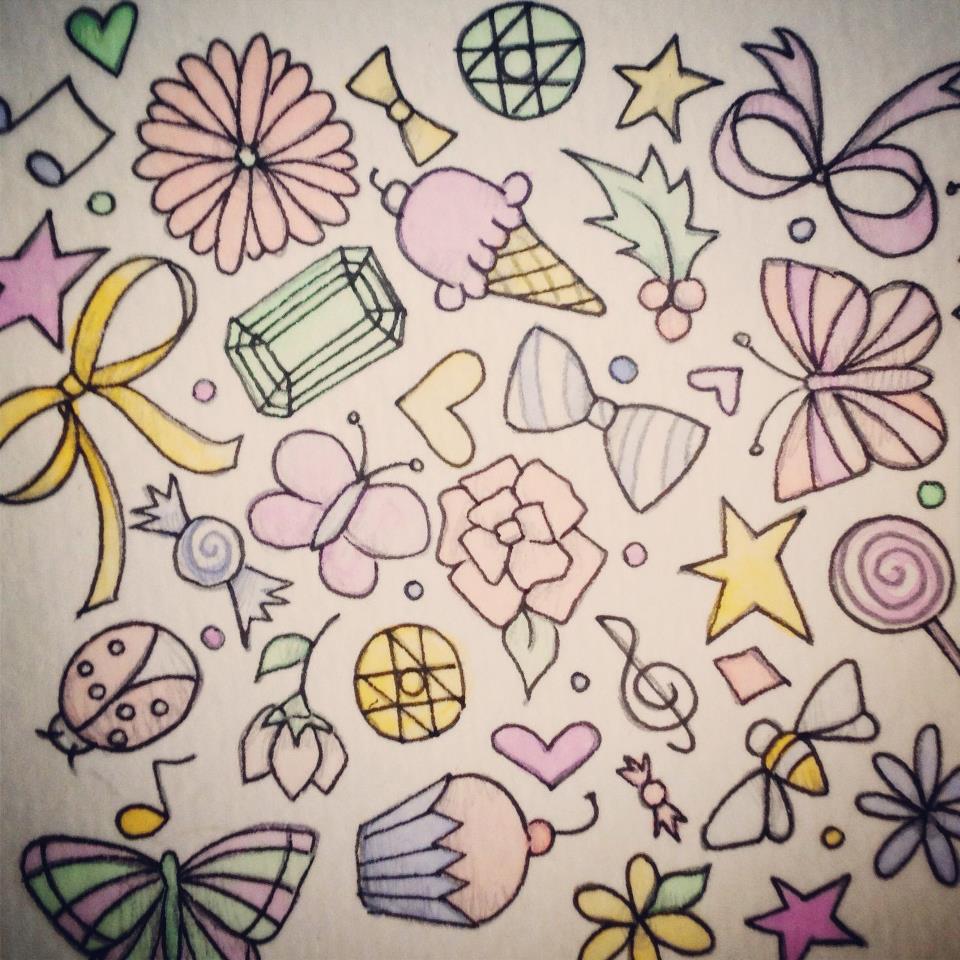
gems bows candy stars butterflies flowers treble pattern

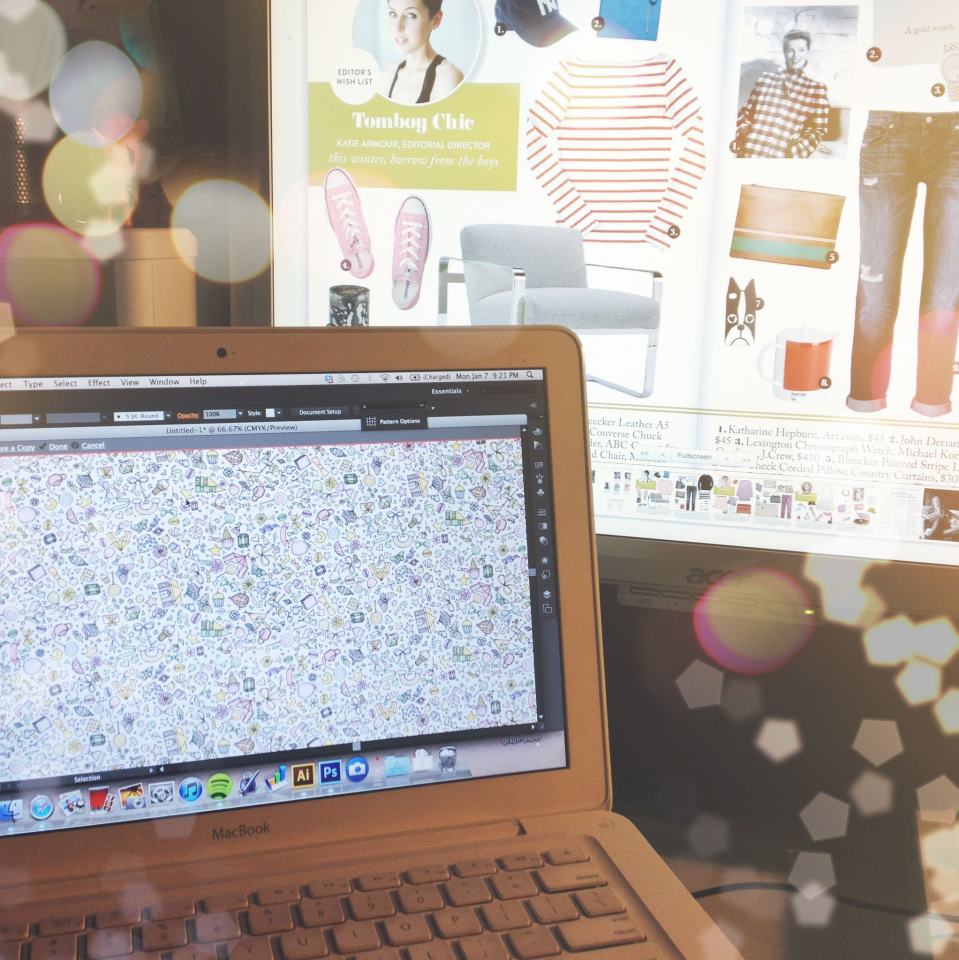
If I am creating a pattern, I will then scan the image into Photoshop to touch up. Then import the image into Illustrator and play around until I have the pattern just right. I'm still fine tuning this process and learning more each new day but it's definitely fun.

making a pattern in adobe illustrator

A: What are your essential tools?

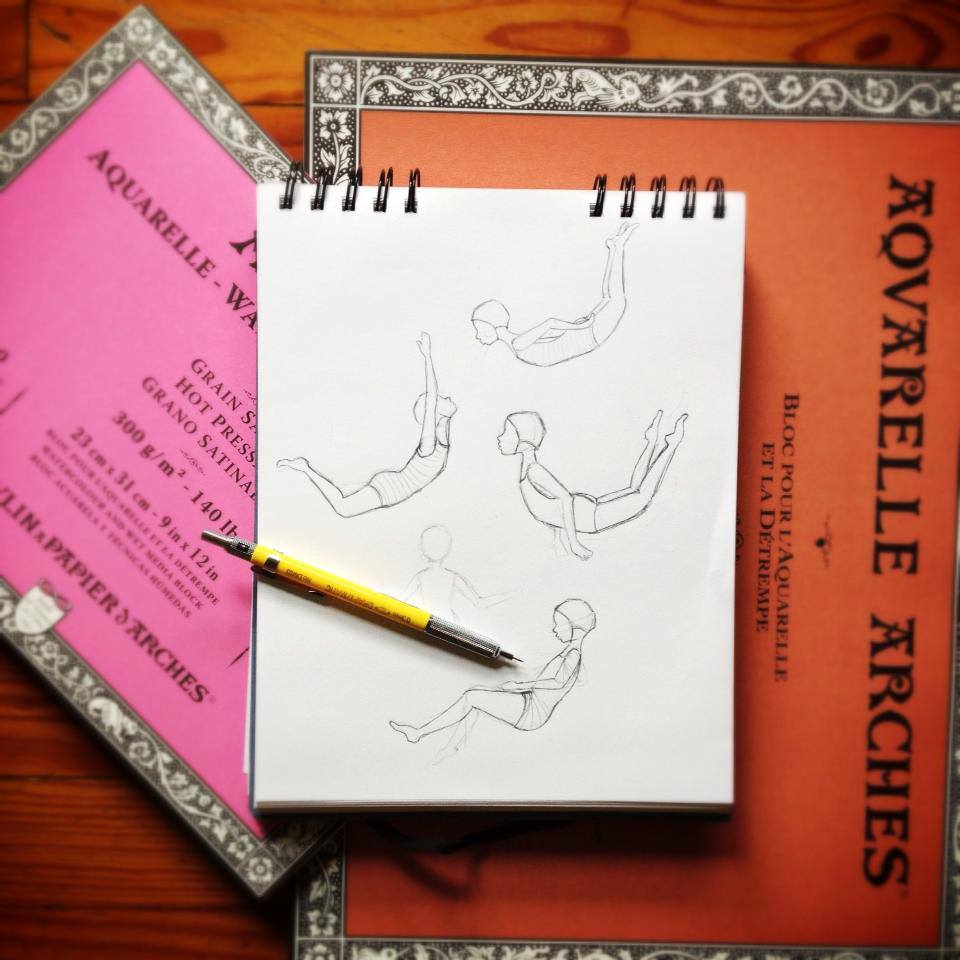
L: A mechanical pencil, a kneaded eraser, smooth hot pressed watercolor paper and watercolors. 

sketches of swimmers

A: Anything else you’d like to share?

L: I am finally making some progress into getting my designs onto fabric. Stay tuned! (And cross your fingers for me!)

A: Will do! Thanks for sharing, Lisa!

In addition to her pattern designs, Lisa also creates many beautiful illustrations. Her cards, giftwrap, and paper goods are offset printed (I love this) so the imagery is crisp and high quality. Be sure to visit Lisa’s fantastic website to check them out, and be sure to like her facebook page.

Monday, June 3, 2013

Proofing Spoonflower

I've made a bunch of Spoonflower designs this week and I've finally ordered a swatch sampler of my designs from the Elements Collection. I've recolored some images too.


Working with digital processes is a bit unusual for me. My background is traditional printmaking, which is a little more "What you see is what you get" in terms of color. Spoonflower is like a black-box process where the inputs are webcolors and the outputs are cloth samples that arrive in the mail a week later.

Fingers crossed. I notice in the website preview that the tile edges show in this design.


I smoothed this design a little more after taking this screenshot. It's important to mend the seams in the tiles so that there are no implied lines. One should be able to blur his/her eyes and not see any lines. I worked on this one until I could tile it in the GIMP and see no edges, but the lines in Spoonflower persist.

I think something deeper is happening here: Aliasing. Basically there is a mismatch between the image size and the samples taken. From Wikipedia:

"[Aliasing] also refers to the distortion or artifact that results when the signal reconstructed from samples is different from the original continuous signal."


My images are represented by discrete pixels. So let's say I have an image that's 125 pixels across, and it's shrunk down 10x for the preview.  The preview can represent the image as either 12 pixels or 13 pixels. Pixels cannot be split -- that's physically impossible. So the image will either need to slice 5 pixels off the edge, or evenly sample and average the values around the imaginary 12.5 pixel area (average 12 and 13 pixels). I guess this second method would make the most sense.  But the first method could account for some clipping in the edge of the image.

Feel free to comment if you have any thoughts. I am just crossing my fingers that the preview will display correctly. I want my fabric to tile right!

Wednesday, May 29, 2013

Another spoonflower print

I am preparing another pattern for spoonflower, though I think the dimensions are a bit troublesome with their software. I am unhappy that there are white lines showing up when it tiles.

Here's one tile:

Here it is tiling correctly in the gimp:
 

But it doesn't look right here. See around 2 inches down, there's a tiny gap? I'll have to rework it tomorrow.


Tuesday, May 28, 2013

If you could be anything

Today's suggestion is "If you could do or be anything in the world, what would you be?"

The answer is really the reason I started this blog -- I dream of being a textile designer. Though I've chosen a more practical (and still very satisfying) career in computer science, I like that I can be creative in my free time.  There's an online printing service called Spoonflower that actually will print my designs on fabric, wallpaper, or giftwrap. All I have to do is make the images tile, and choose from their printable colors. I ordered fabric swatches and their handy color guide to get started:


Tonight I transformed the water pattern into a Spoonflower-ready pattern. I picked blue 00FFD4.


I have to proof my patterns before they are available for purchase. I plan to add the rest of the Elements collection in the coming week.